
It’s been hiding in plain sight for decades: dishonest clock‑ins, disputed damage claims, unverified safety training, and a never‑ending churn of workers. These are the human‑scale problems that crush warehouse profitability, and no conveyor belt or picking robot can solve them.
ATLWarehouse has built the fix. We’ve launched a branded TikTok AR effect tied to a RWATOK.land 3‑word address and a QR code that can be scanned across every dock, aisle, and storage bay. The result is a simple but transformative system where video becomes the universal language of truth in the warehouse and it’s already saving operators millions.
📉 The Real Cost of Invisible Work
Workplace theft, incident fines, and the “revolving door” of labor are bleeding warehouses dry.
Before we show the fix, let’s look at the damage that’s currently being ignored.
The average worker loses 4.5 hours per week to time‑theft practices, amounting to nearly six weeks of paid absence each year. Across the U.S., this drains over $11 billion annually from employers. For a single warehouse, the costs are brutal: a 2025 industry report found nearly 24% of U.S. workers admit to manipulating time records, costing employers an average of 4.5 hours of paid but unworked time per employee weekly. That’s six lost weeks of productivity per worker every year.
At the same time, workplace injuries and compliance gaps hammer the bottom line. The U.S. spends over 176.5 billion dollars every year on work injuries, and a single OSHA serious violation in 2025 can cost up to $16,550.
Meanwhile, the warehouse workforce is a revolving door. The transportation and warehousing sector saw a monthly separation rate of 4.1% in June 2025, which annualizes to a staggering 49% turnover rate. In December 2025 alone, about 166,000 workers quit their jobs in this sector. Replacing a single warehouse associate costs 30 to 150 percent of their annual salary. For a forty thousand dollar per year worker, that is twelve thousand to twenty eight thousand dollars per departure. And new hires typically operate at just 25 to 75 percent productivity during their first 4 to 12 weeks.
Hidden problems, massive fines, and constant churn that’s the status quo. ATLWarehouse changes it.
🎥 The ATLWarehouse AR Effect: The Universal Proof Layer
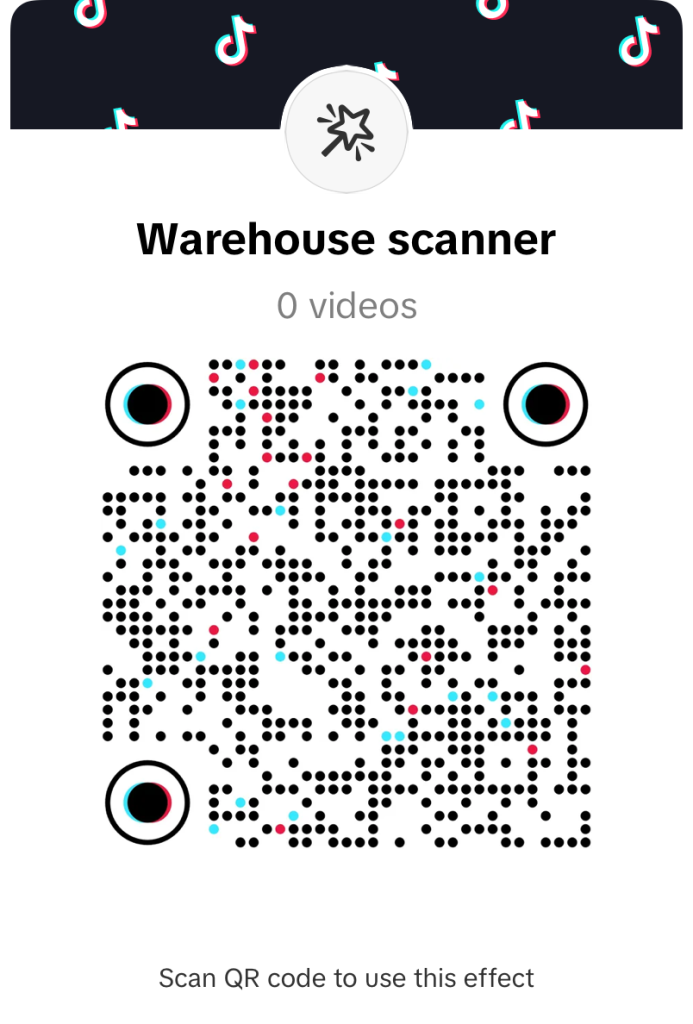
When a worker, contractor, or manager scans the QR code at a specific 3‑word address (like ///dock.north.point), the ATLWarehouse TikTok AR effect activates. They can then record a short video that is instantly watermarked, time‑stamped, and geolocated to that exact spot.
The effect is branded with the RWATOK.land 3‑word address. That means the location itself becomes part of the video’s visual identity there’s no confusion about “where” the incident happened.
92% of consumers trust user‑generated content over brand messages. ATLWarehouse applies that same trust to the loading dock. UGC video drives 29% more web conversions and 4x higher click‑through rates than traditional brand ads, but inside a warehouse, those same principles prove accountability, not just marketing results.
⏱️ Use Case #1: Video Time‑Clock-In/Out
A worker scans the QR code at their assigned 3‑word address, and a short video of their face and the surrounding work area is recorded. The AR effect overlays the exact time and location. No more buddy punching. No more “I was at my station.” Time theft drops to zero because the proof is visual and indisputable.
For a warehouse with 100 employees, eliminating just 1 hour of unworked time per day per employee at an average wage of 25 dollars per hour would save 65,000 dollars per month. That is before counting the hidden costs of rework, misinformation, and administrative overhead.
📹 Use Case #2: Video Incident Reports
When a fork‑lift grazes a support beam, a worker records a 15‑second video with the AR effect. The footage immediately captures the damage, the timestamp, the location, and the employee’s narration. No more “it looked worse yesterday” debates. Incident documentation is now immutable and shareable.
Warehouse safety training videos are also more effective with UGC. Workers learn best when they see real‑world examples from their peers, and the AR effect turns every worker into a potential safety educator.
🎥 Use Case #3: Video ReelView for Warehouse Renters (UGC Reviews)
A TikTok seller rents a micro‑warehouse unit at ///pallet.safe.secure. Before moving in, they record a walkthrough using the AR effect. The video shows the floor, the lighting, and the accessibility and it’s instantly posted to the ATLWarehouse community feed. Future renters can now see the actual condition of the space before they sign a lease.
This ReelView system changes rental behavior entirely. Instead of trusting a static photo that could be years old, renters rely on video‑based UGC that’s verified by the community. It’s Airbnb for warehouses with the trust baked in by design.
🛡️ Use Case #4: Video Proof of Work for Contractors
A contractor is tasked with clearing a specific bay. They scan the QR code, record the empty space, and upload the video. The customer can watch the footage in real‑time and confirm the job is complete. Disputes evaporate because the “before and after” is documented on video.
This also eliminates fraudulent claims of “missing” items or “uncompleted” work. Contractors build a reputation based on their video logs, and managers can audit tasks without ever stepping onto the floor.
📦 Use Case #5: Video Safety Verbal Agreements
Before operating heavy machinery, a worker records a quick video acknowledging the safety protocols. They say, “I have read and understood the safety guidelines for this shift.” The AR effect captures their face, the equipment, and the timestamp. Compliance becomes verifiable not just a signature on a clipboard that could have been forged.
For safety‑critical operations, this single feature could prevent the kind of willful‑violation fine that reaches $165,514.
🔁 Use Case #6: Video Move‑In/Move‑Out Documentation
Renters must record a video of the space before occupying it and again upon departure. The AR effect ensures both videos are tied to the same 3‑word address. If a renter leaves damage, the owner has proof. If the owner tries to claim damage that was pre‑existing, the renter has proof.
This ends the long‑standing war over security deposits and repair costs. Every square foot is documented at every transition.
🧠 How Social Accountability Reduces Churn
When workers know their tasks are being documented not to punish them, but to celebrate good work the culture shifts. Workers in positive workplace cultures are up to four times more likely to stay. The ATLWarehouse system allows managers to publicly recognize a worker who handles a difficult task well. That video gets upvoted, shared, and stored. The worker builds a reputation that follows them across different warehouse shifts, and ultimately across different employers.
For warehouse owners, this is a retention machine. The social proof of a worker’s reliability becomes their most valuable asset and they’ll stay with a platform that showcases it.
💰 The Bottom Line: What This Saves a Warehouse
Adding it all up:
- Time theft elimination: 4.5 hours per week reclaimed per worker equals 5,850 dollars per year per worker at 25 dollars per hour.
- Incident reduction: Prevention of just one willful OSHA violation saves up to 165,514 dollars.
- Churn reduction: Retaining just 10 workers at a replacement cost of 20,000 dollars each saves 200,000 dollars annually.
- Rental documentation: Eliminating just one disputed damage claim at 5,000 dollars per incident pays for the system many times over.
The platform pays for itself in weeks, not years.
🚀 The QR Code + AR Effect Workflow
Every 3‑word address on ATLWarehouse now includes a unique QR code. Anyone with a smartphone can scan it and immediately activate the branded AR effect. The workflow is simple:
- Scan the QR code at the location.
- The AR effect overlays the 3‑word address and timestamp.
- Record the video.
- The video is automatically uploaded to the appropriate community feed (shift log, incident report, safety training, rental review, etc.).
- Managers and peers can upvote, comment, and store the video for future reference.
This is proof as a service and it’s built into every square foot of the ATLWarehouse network.
📌 Warehouse Owners Can Now Rent With Video UGC Documentation
For the first time, a warehouse owner can rent space with a complete video history of how previous tenants treated the space. Every move‑in and move‑out video is stored and searchable. Renters who leave spaces in excellent condition build a video‑based reputation that landlords can see before signing a lease.
This eliminates the guesswork and the disputes. The video record becomes the single source of truth for the entire lifecycle of a rental.
🔮 The Future Is Verified
The era of blind trust in warehouse operations is over. ATLWarehouse has turned every smartphone into a verification tool, every worker into a potential documentarian, and every dispute into a solvable problem with video evidence.
The QR code + AR effect + 3‑word address system is not a feature it’s a new operating system for the logistics industry. It replaces guesswork with proof, confrontation with collaboration, and turnover with accountability.
///warehouse.verified.future is ready. Scan the QR code at your nearest dock and see for yourself.
Ready to eliminate time‑theft, document every incident, and retain your best workers? Join ATLWarehouse today.